

Latest News
-
Team spirit, creativity and competition – This was Coreso’s annual Fun Day
02/07/2025
-
Publication of Coreso’s 2024 Activity Report
24/06/2025
-
Visit of OCCTO, the Japanese Organization for Cross-regional Coordination of Transmission Operators
12/06/2025
-
Coreso successfully hosted its first-ever Stakeholders Meeting in Brussels on 21 March 2025
28/03/2025
Our Shareholders
Like the other Regional Coordination Centres (RCCs), Coreso is a service provider of
nationally regulated Transmission System Operators (TSOs).
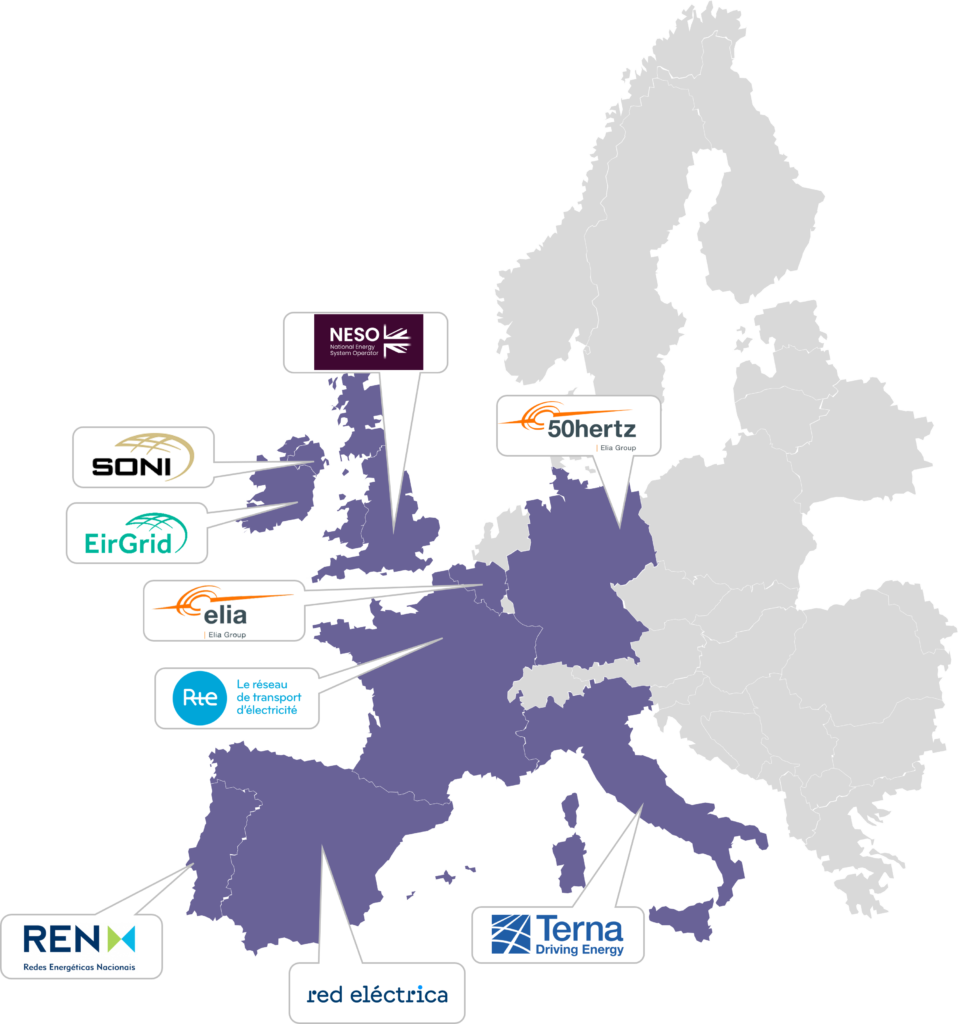
As an independent company, we are 100% owned by 9 TSO shareholders which territories cover
around 55% of combined EU and UK populations.
Our Team
Located in Brussels, we are a team of experienced experts from several European countries, combining their expertise to guarantee and improve the reliability of Europe’s electricity supply.
Electricity plays a crucial role in our daily lives. Since it is available at the flick of a switch, we often forget about the complex high-voltage system that forms the link between generation and demand. Europe’s high-voltage grids being highly interconnected, transnational coordination is therefore essential for security of supply.
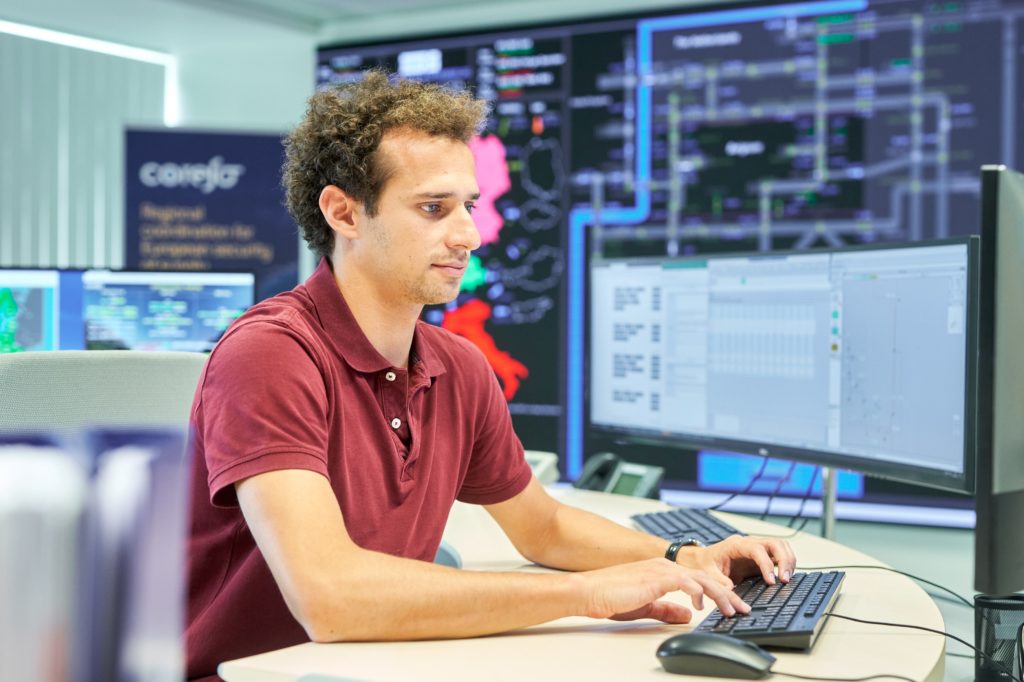
In close cooperation with the other RCCs, we develop and provide coordination regulated services to secure operations of the high-voltage electricity system, across the entire European continent.
Operating 24 hours a day and 7 days a week, our objective is to proactively support Transmission System Operators to ensure security of supply on a European regional basis. Focusing on the coordination of grid operational planning activities, we anticipate operations both in the long-term and the short-term, from a year-ahead until intraday timeframes (few hours before real time).
-
FOLLOW US:


Copyright © 2025 CORESO | Credits | Cookie policy | Privacy Policy | Terms of use | Webdesign ALYS